
Teaching and Learning in Prison: The Transformative Role of the Educator in Re-educational Contexts

In contemporary pedagogical discourse, the role of the educator in re-educational contexts represents a crucial theoretical and practical issue. Education in prison, in particular, cannot be understood as a mere transmission of knowledge or functional skills for reintegration, but rather as a profound relational practice in which educator and participant co-construct meaning. From this perspective, […]
Empathy and Emotional Intelligence in Prison Education: The Transformative Role of Play

Emotional intelligence and empathy are central competencies for building meaningful relationships and for reintegration into social and working life. In prison education contexts—often marked by marginalization, isolation, and affective deprivation—these competencies are frequently underdeveloped or latent, yet they are crucial for any genuine process of personal transformation. Education in prison, therefore, cannot be limited to […]
The Pedagogical Function of Error in Prison Education: An Analysis Through the ICARUS Project
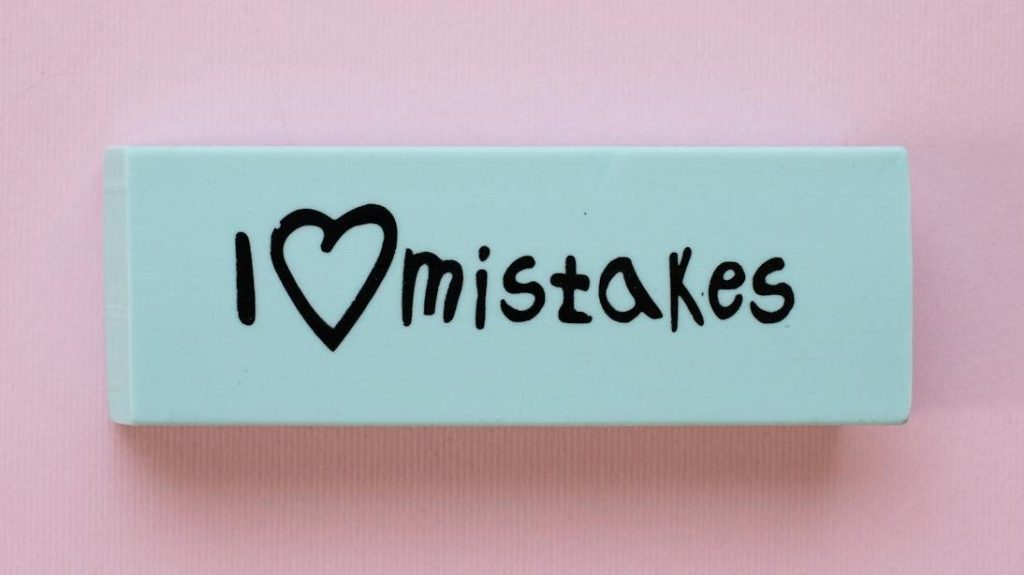
Traditionally regarded as something to be avoided in educational settings, error can play a strategic role in transformative learning processes—especially in socially vulnerable contexts such as prisons. This contribution explores the pedagogical value of error in light of the European project ICARUS – Including Chess As a Re-education Up-Skilling Tool (KA220-ADU-D5940462), with specific reference to […]
Chess as therapy
Soft skills are the type of ability that is becoming increasingly sought after in the labour market, even more so than the technical skills that are acquired through study programmes. Soft skills are the type of abilities that include, among others, emotional intelligence, team spirit, risk assessment and taking responsibility. For these reasons, it is […]
The movement of the horse
May 2024. Perugia. Two women approach the Fontana Maggiore, in the centre of Piazza IV Novembre. One of the women shields her eyes from the glare of the sun, which is quite bright considering it’s only eight in the morning, then she bends down and stops to observe one of the twenty-five sides of the […]
CHESS AS AN EDUCATIONAL TOOL FOR SOCIAL INCLUSION AND EMPLOYMENT
Andreas Ahrens1, Antonia Castellani2, Maria Chiara Di Francesco3, Jelena Zascerinska4, Mihails Zascerinskis5, Anastasija Bikova6, Irina Abjalkiene7, Olga Gukovica8, Ludmila Aleksejeva9 1 Dr.-Ing. habil. (Electrical Engineering), Professor, Hochschule Wismar University of Applied Sciences Technology, Business and Design, Wismar, Germany, e-mail: andreas.ahrens@hs-wismar.de 2 Senior researcher, Skill Up, Rome, Italy, e-mail: a.castellani@skillupsrl.it 3 Junior researcher, Skill Up, Rome, […]
CHESS PLAY AS A MEANS OF IMPROVING INCLUSIVENESS OF DISADVANTAGED GROUPS
Andreas Ahrens1, Jelena Zascerinska2, Anastasija Bikova3, Ludmila Aleksejeva4, Mihails Zascerinskis5, Olga Gukovica6, Irina Abjalkiene7 1 Hochschule Wismar University of Applied Sciences Technology Business and Design, Germany 2, 3, 4, 5, 6, 7 Centre for Education and Innovation Research, Latvia Abstract. Chess game as a means of the enhancement of inclusiveness of disadvantaged groups is attracting […]
Caring: Icarus Project and helping relationships
The essence of being human is to Care, is to take care of other human beings. The philosopher Heidegger traced a subtle but important diversification within this attitude. ‘To care’ means to provide help by substituting oneself for the needy subject, bypassing him or, in extreme cases, even mortifying him by making him perceive the […]
ICARUS and the virtuous circle
The virtuous circle is a process which, following a favourable external event, induces an improvement on related activities. The opportunity to learn, collaborate and experiment in prison is a favourable event that produces a positive feedback on other important activities and generates positive effects for the individual and the community. What does this mean? It […]